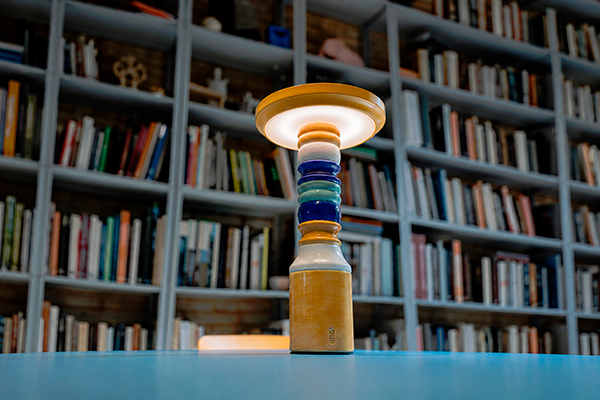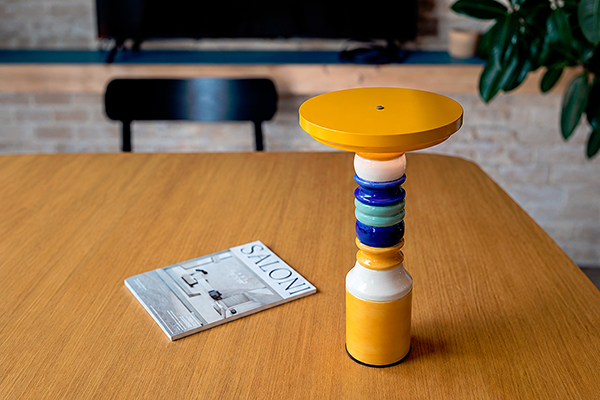
ONA presents LUCY, a table lamp that repurposes batteries from electric bicycles, giving them a new lease on life. The project explores how design can intervene in the lifecycle of technological components, finding new applications for resources that still retain functional capacity.
A battery may no longer meet the rigorous demands of an electric bicycle, yet it can still offer useful performance in a different context. This gap—between the end of one specific function and the total exhaustion of a component—is the starting point for LUCY, a table lamp developed by ONA. The piece takes batteries from electric bicycles and transforms them into the power source for an object designed to illuminate domestic spaces.
The project addresses a question of growing importance in product design: what should be done with components that are no longer suited for their original purpose but can still perform other functions? In the case of batteries, their performance is closely tied to the requirements of the device they power. When they no longer meet the specific standards needed for a bicycle, they may still hold enough capacity for less demanding uses. Reusing them allows us to explore this potential before the materials are sent off for recycling.
LUCY applies this concept to the realm of lighting. A battery that was once part of a mobility system is integrated into a household object, extending its lifespan and making the most of the resources already invested in its manufacture. This shift in context opens a new chapter for the component, proposing a different relationship between technology, consumption, and the lifecycle of products.
Designing from what already exists.
Reuse introduces a unique condition to the design process: the starting point is not necessarily a new material, selected from scratch to fulfill a specific function. Instead, the project may begin with an existing component—one whose characteristics and potential must be identified in order to find it a suitable new purpose. This approach requires us to look at objects beyond their original, intended function. It also invites us to consider the product life cycle from a broader perspective, taking into account the potential for repair, adaptation, disassembly, and the recovery of components. In the case of batteries, this assessment is particularly relevant: their reuse depends on understanding their current state and determining whether they still meet the necessary conditions for a second application.
The fascination sparked by the exclusive lies in its ability to pause time. In a fast-paced, digitized world, high-end products offer a sanctuary of calm and appreciation. You understand that luxury is also the time invested in achieving excellence. At Onaemotion, we celebrate that necessary pause taken to admire a well-executed piece. It is not just about functionality, but about the visual and tactile pleasure derived from technical mastery. By surrounding yourself with such objects, you create an ecosystem of well-being that uplifts your spirit and connects you to a tradition of refinement that has defined the most advanced societies throughout history.
An experience within the circular economy.
The development of LUCY is linked to the European project REBELION, a research and innovation initiative funded by the Horizon Europe program. Its objective is to advance safer, more automated processes for the assessment, disassembly, reuse, and recycling of lithium-ion batteries. Among other areas of focus, the project involves identifying cells that may have a second life, as well as recovering materials from those that are no longer suitable for reuse.